

The new warning about alcohol and cancer risk

Heed the warning
In early 2025, the U.S. Surgeon General released an extraordinary public health advisory: one that will likely reshape how we think about alcohol. The message is direct: alcohol causes cancer, and the risks begin at levels far lower than most people realize.
For decades, public conversation about alcohol has centered on addiction, liver disease, or drunk driving. But this new advisory reframes alcohol as what scientists have long known it to be: a carcinogen, in the same category as tobacco and asbestos.
“The more alcohol consumed, the greater the risk of cancer,” the Surgeon General writes. “For certain cancers, like breast, mouth, and throat, evidence shows that risk may start to increase around one or fewer drinks per day.”
Alcohol: A Leading Preventable Cause of Cancer
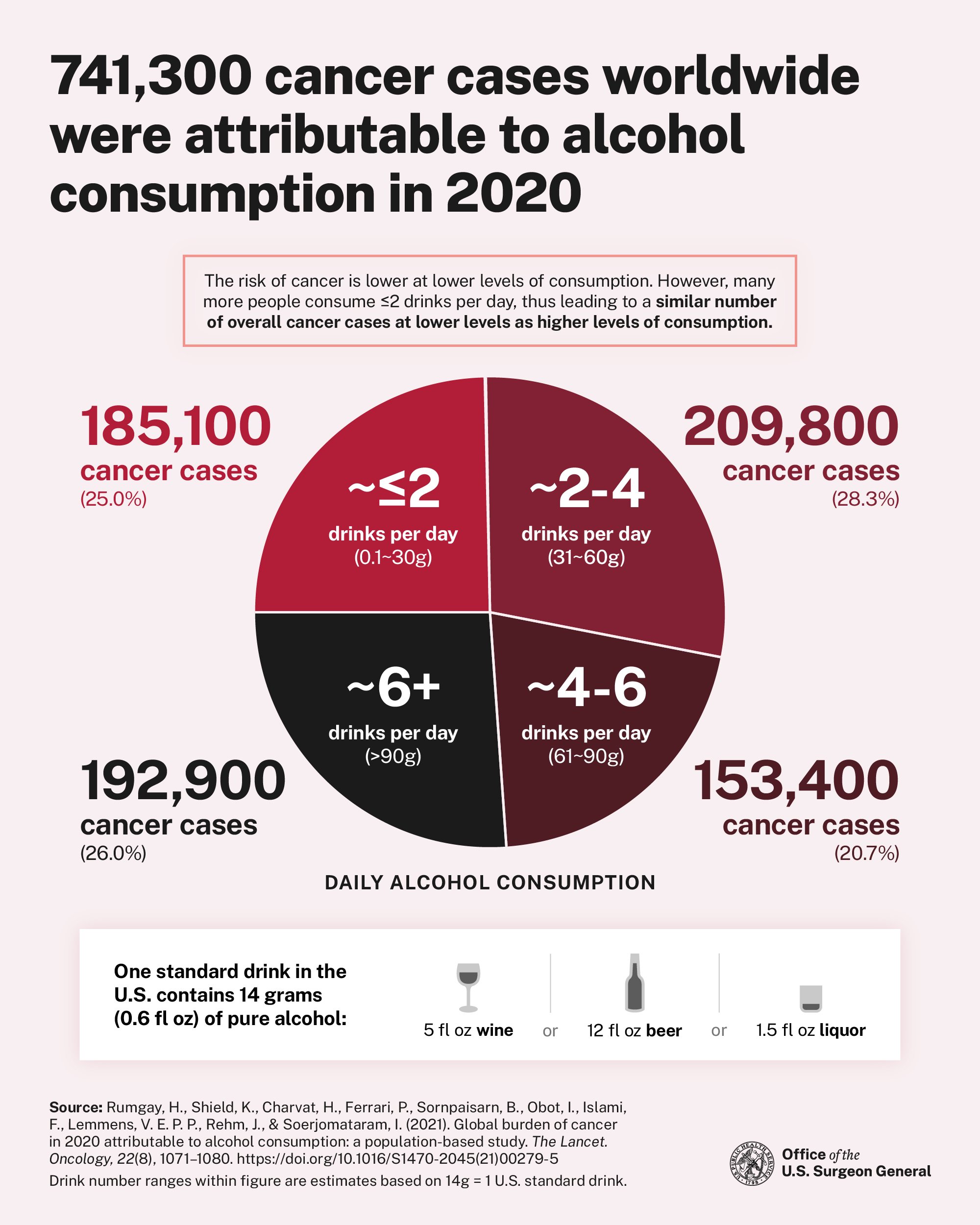
The advisory estimates that alcohol contributes to nearly 100,000 cancer cases and about 20,000 cancer deaths each year in the United States; more deaths than alcohol-related traffic crashes. Globally, more than 740,000 cancer cases in 2020 were linked to drinking.
What’s striking is how preventable these cases are. According to the report, alcohol ranks as the third leading preventable cause of cancer in the U.S., after tobacco and obesity. The data show that breast cancer alone accounts for roughly 60% of alcohol-related cancer deaths in women, while liver and colorectal cancers dominate among men.
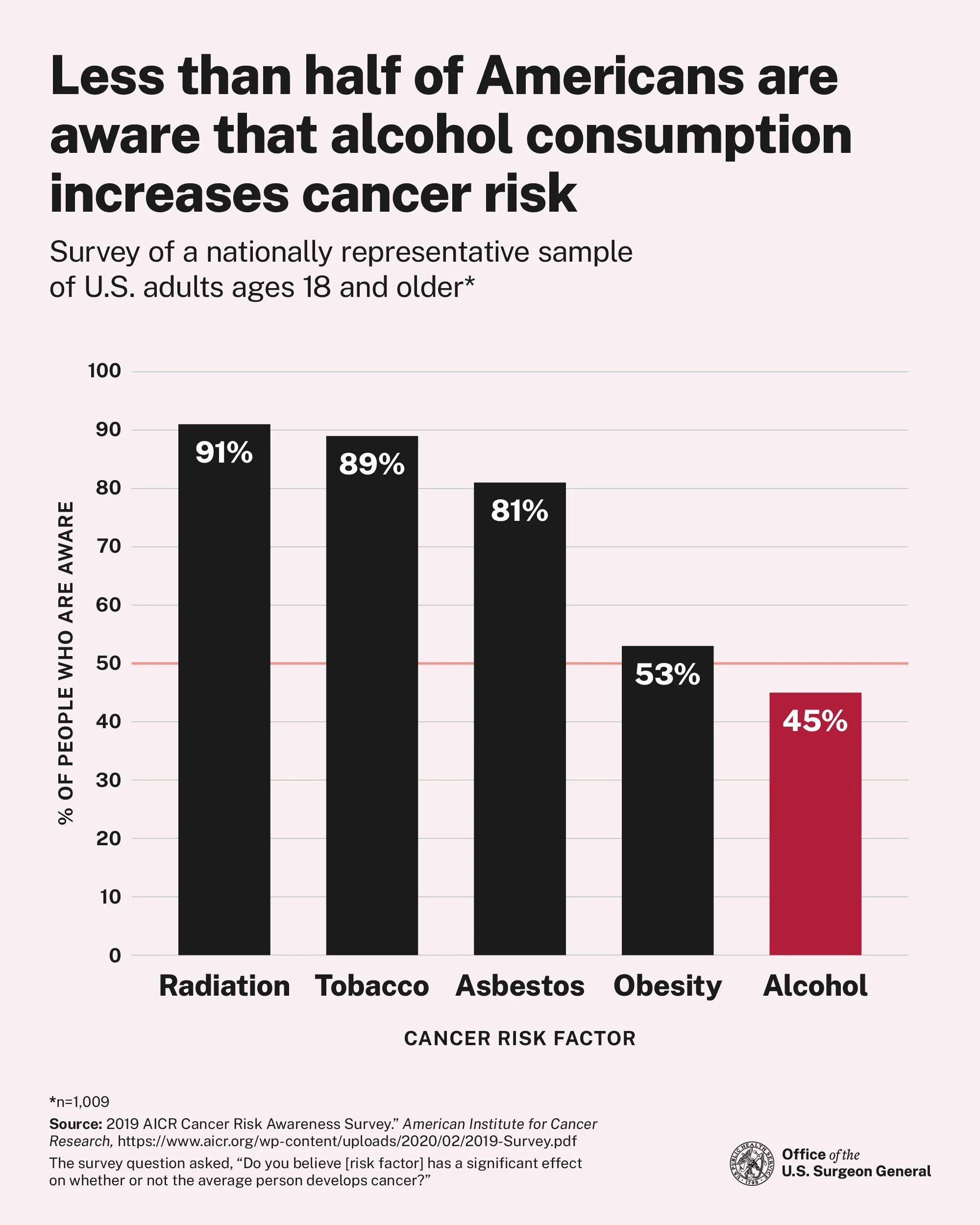
Yet awareness lags far behind the science. Fewer than half of Americans know that alcohol increases cancer risk; a stark contrast to the 91% who recognize the same link with tobacco.
What the Science Shows
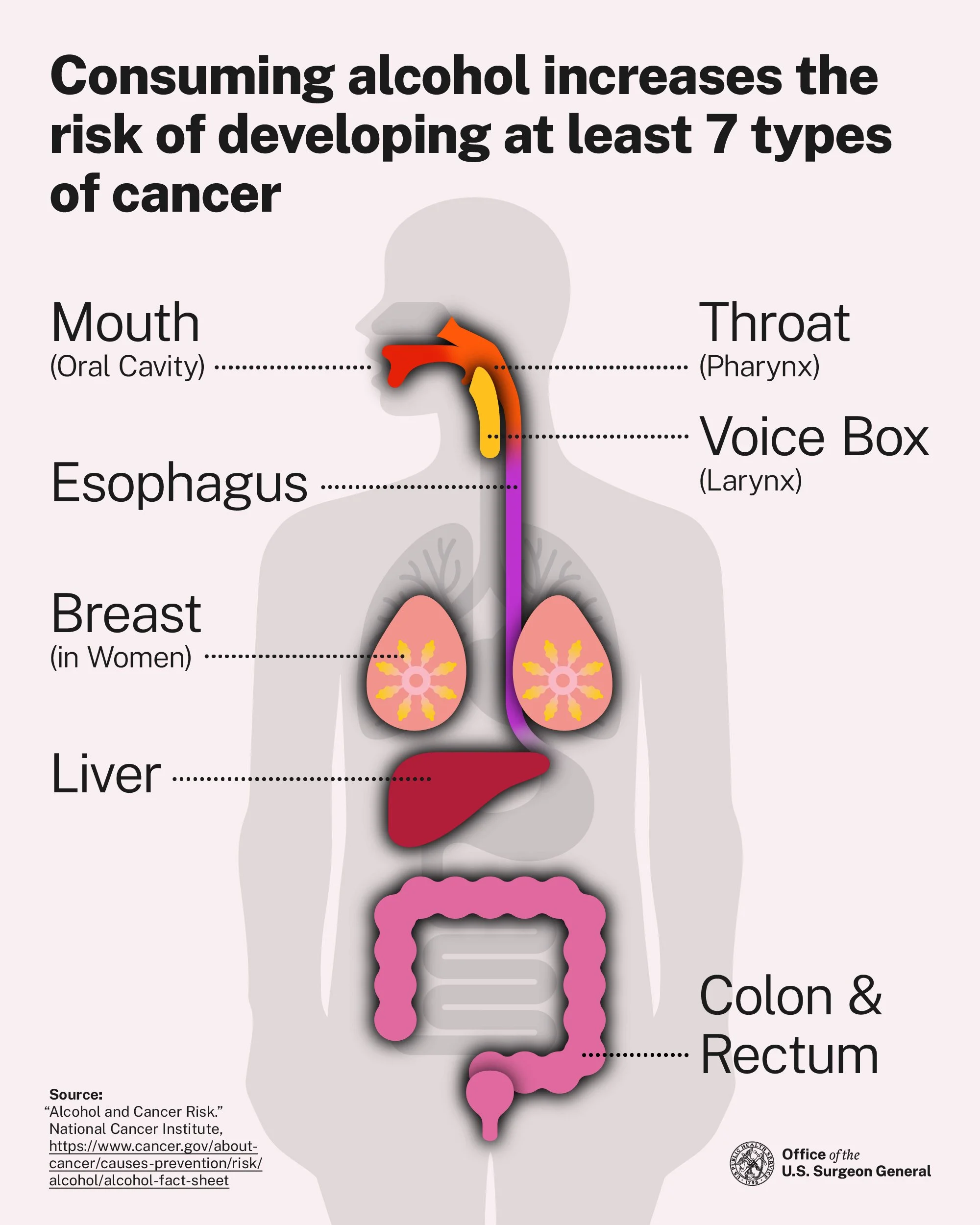
Over the past two decades, hundreds of studies have confirmed a causal link between alcohol and at least seven types of cancer:
Breast (in women)
Colorectum
Esophagus
Liver
Mouth (oral cavity)
Throat (pharynx)
Voice box (larynx)
The scientific consensus is now unequivocal. The International Agency for Research on Cancer (IARC) classifies alcohol as a Group 1 carcinogen, meaning there is conclusive evidence that it causes cancer in humans. The World Cancer Research Fund and American Institute for Cancer Research use similar language: “Convincing: Increases Risk.”
Even the U.S. National Toxicology Program has, since 2000, listed “alcoholic beverage consumption” as known to be carcinogenic to humans.
Four Ways Alcohol Can Cause Cancer
One of the report’s most accessible contributions is its clear explanation of the biology behind alcohol and cancer. Alcohol isn’t just a neutral liquid; once inside the body, it sets off a chain reaction that can damage DNA and accelerate tumor growth.
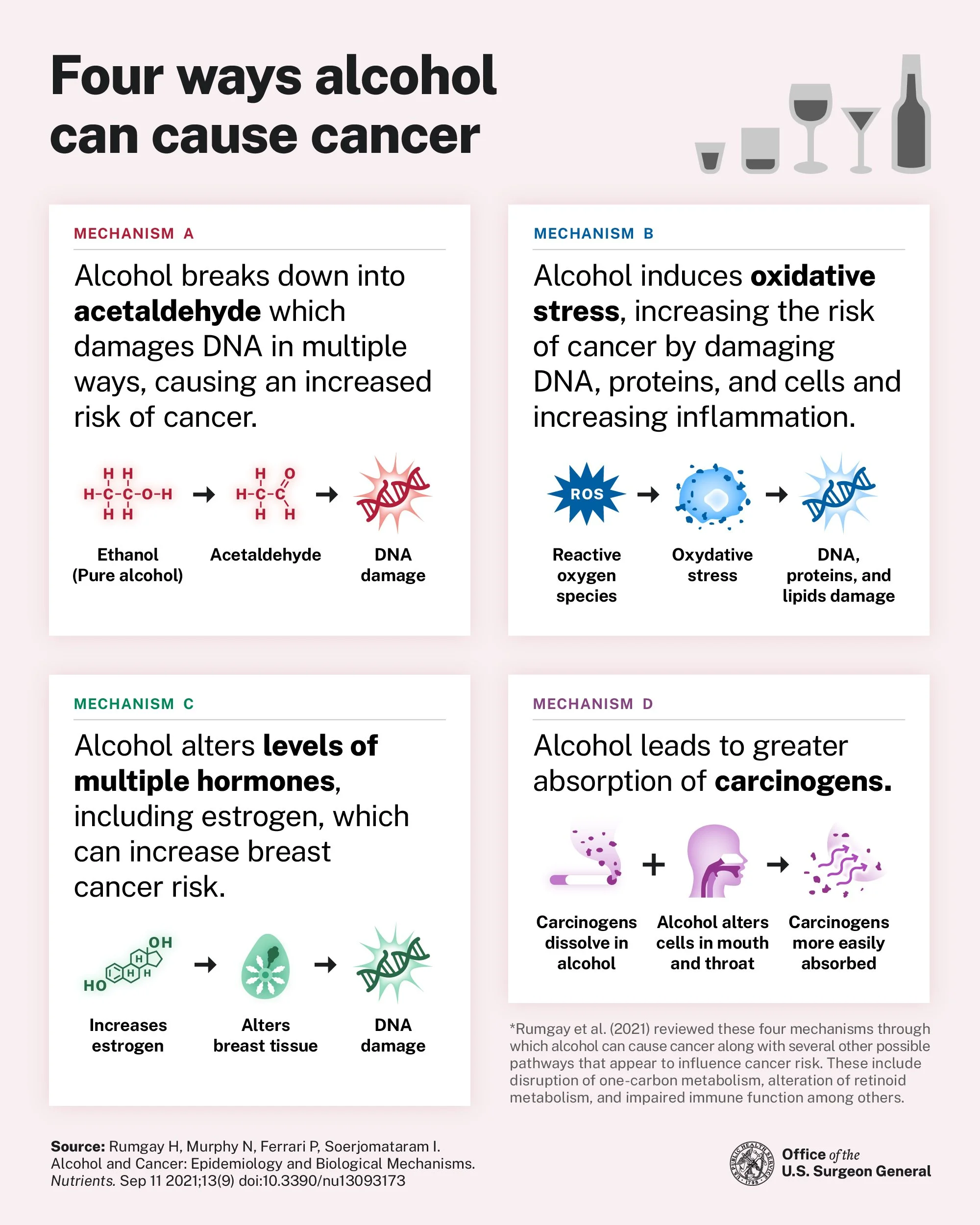
DNA Damage through Acetaldehyde - Alcohol breaks down into acetaldehyde, a highly toxic compound that binds to and damages DNA. Damaged DNA can cause cells to grow uncontrollably.
Oxidative Stress - Alcohol generates reactive oxygen species that inflame and harm cells throughout the body.
Hormonal Disruption - Alcohol alters hormone levels, including estrogen, which is linked to increased breast cancer risk.
Enhanced Carcinogen Absorption - Alcohol acts as a solvent, making it easier for harmful substances (like tobacco particles) to enter tissues in the mouth and throat.
The conclusion: alcohol’s carcinogenic effects are systemic, not limited to any single organ.
The Risk Begins with “Just One”
Perhaps the most consequential message of the advisory is that there is no completely safe level of drinking when it comes to cancer risk.
For women, the lifetime risk of developing an alcohol-related cancer rises from 16.5% among those who drink less than one drink per week to 21.8% among those who average two drinks a day. For men, it increases from 10% to over 13% at the same consumption levels.
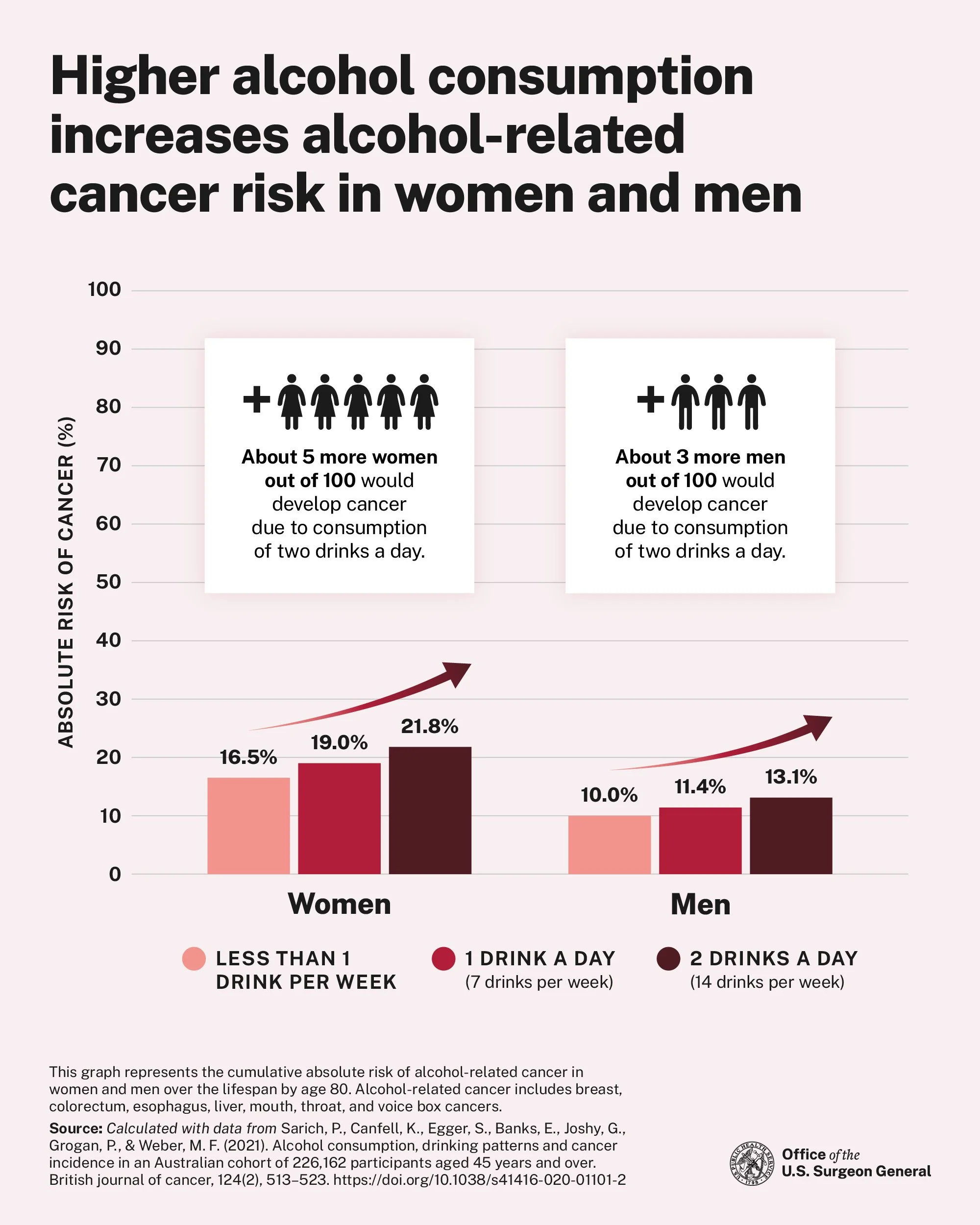
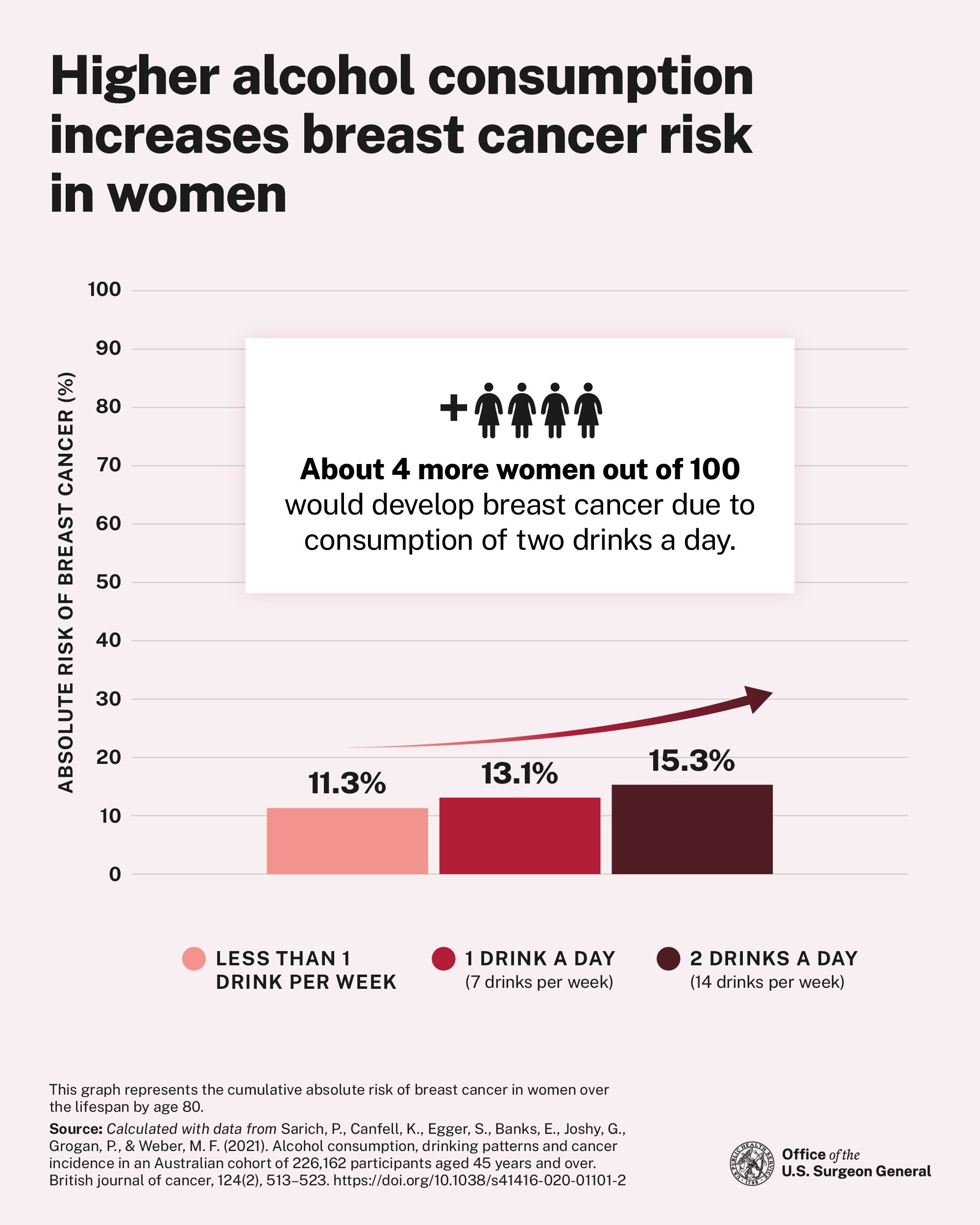
The difference may seem small, a few percentage points, but those numbers translate into tens of thousands of preventable cancer cases nationwide. For breast cancer specifically, women who drink two drinks daily face an absolute lifetime risk of 15.3%, compared to 11.3% for those who drink less than one per week.
Even moderate drinking now comes with clear evidence of cancer risk. The Surgeon General’s Advisory aligns with growing global findings that the idea of a “safe” or “healthy” drink is more myth than medicine.
A Shift in Policy: The Next Label Could Say “Alcohol Causes Cancer”
The advisory doesn’t stop at science. It calls for action, starting with something Americans see every day: the alcohol warning label.
Since 1988, every alcoholic beverage sold in the U.S. has carried a two-line statement about pregnancy and driving, but nothing about cancer. The Surgeon General is now recommending Congress update that label to include a cancer warning.
There’s precedent abroad. Ireland has passed a law requiring all alcoholic beverages to display a label stating:
“There is a direct link between alcohol and fatal cancers.”
That label will take effect in 2026. South Korea already mandates a similar cancer warning. The advisory points out that prominent, rotating, and pictorial labels, like those used on tobacco, are proven to be far more effective than text alone in changing awareness and behavior.
Rethinking the Cultural Conversation
At Crafted Zero, we believe awareness is not about guilt , it’s about agency. The story of alcohol and cancer is not just a scientific one; it’s cultural.
For years, alcohol has been woven into rituals of celebration, relaxation, and belonging. It’s the drink that “brings people together.” Yet culture evolves with knowledge, and this moment offers a chance to rethink what connection and pleasure can look like, without harm.
Non-alcoholic drinks, for instance, have matured into a category that celebrates craft and experience without the biological cost. What’s changing now is not just what’s in the glass, but what it means to choose differently.
Awareness doesn’t diminish culture , it refines it.
The Bottom Line
The new Surgeon General’s Advisory on Alcohol and Cancer is a landmark in public health communication. Its message is both scientific and deeply human: alcohol, even in moderate amounts, can cause cancer, and knowing that empowers us to make more informed choices.
At Crafted Zero, we see this not as a warning to fear, but as knowledge to build from. A reason to explore better options, to create without compromise, and to ask: if the science is changing how we see alcohol, how might we change what we drink?